
Province launches anti-racism office, but police racism remains unaddressed
- Polina Kozlova

- Feb 2
- 3 min read
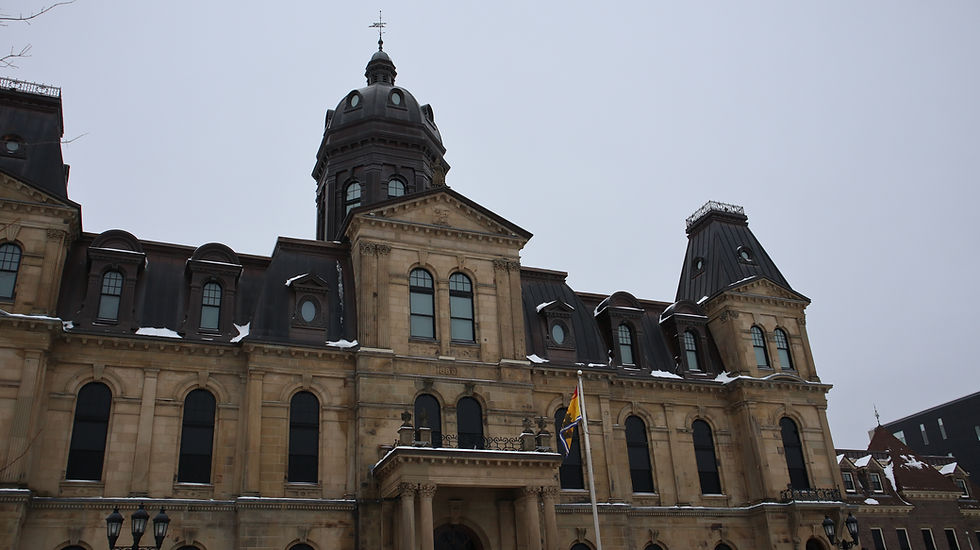
The New Brunswick government has launched a new anti-racism office and released its response to the province’s systemic racism report, but critics say the plan leaves unanswered questions about how systemic racism in policing will be addressed.
The new anti-racism office will operate within the Department of Post-Secondary Education, Training and Labour, transforming New Brunswick into the fifth jurisdiction in Canada to establish a dedicated anti-racism office.
The province says the office will coordinate efforts across government to address systemic racism through policy changes, community partnerships and public reporting.
The announcement accompanies the government’s response to the systemic racism commissioner’s final report, released in 2023. The province says 59 per cent of the report’s 86 recommendations have been completed or are underway, with another 19 per cent scheduled to begin.
“Racism has no place in New Brunswick,” Post-Secondary Education, Training and Labour Minister Jean-Claude D’Amours said in a statement. “Creating a province that is inclusive, welcoming and free of hate is a shared responsibility.”
D’Amours said dismantling systemic racism will require sustained, long-term effort and said the new office outlines how the government intends to lead that work.
The province said that a public website will track progress on the recommendations as part of its transparency measures.
However, the new framework does not clearly outline how recommendations related to policing and law enforcement will be implemented.
Those recommendations fall largely outside the Department of Housing’s new office and involve the Department of Justice and Public Safety, municipal police forces and the RCMP.
The systemic racism commissioner’s report documented concerns from Indigenous, Black and other racialized communities about racial profiling, police use of force and a lack of independent oversight.
Concerns about policing were renewed last week following a statement from the six Chiefs of the Wolastoqey Nation, who stated that systemic racism in law enforcement continues to have deadly consequences for Indigenous people in New Brunswick.
In a statement released on Jan. 19, the Chiefs said four Indigenous people have been killed by police in the province since 2020: Chantel Moore of Tla-o-qui-aht, killed in Edmonston in June 2020; Rodney Levi of Metepenagiag, killed in Red Bank later that month; Steven “Iggy” Dedam of Elsipogtog, killed in September 2024; and Bronson Paul of Neqotkuk, killed in January 2026.
“Everyone must recognize this is a deep-seated issue and call it what it is: systemic racism leading to disproportionate and unnecessary deaths of Indigenous people,” said the Chiefs.
They said neither the federal nor provincial governments maintain publicly available data tracking police-related killings.
Based on community records, there have been at least six incidents involving lethal force by law enforcement in New Brunswick since 2020, four involving Indigenous people.
The Chiefs called for transparent investigations and Indigenous representation on the province’s Serious Incident Response Team, which investigates police actions resulting in death or serious injury. They also renewed calls for community-based policing in Wolastoqey communities.
Advocacy groups have also raised concerns about the absence of specific policing reforms in the province’s anti-racism strategy, including the continued use of street checks, also known as carding.
Critics said that the practice disproportionately affects racialized people. While some provinces have restricted or banned street checks, New Brunswick has not implemented a province-wide ban.
The government has said the anti-racism office is not intended to replace existing oversight mechanisms, but it has not provided details on how police-related recommendations from the commissioner’s report will be monitored or publicly reported.
As the province moves ahead with its anti-racism strategy, critics say its effectiveness will depend on whether policing, one of the most contentious areas identified by the commissioner, is meaningfully addressed.


Comments